
No—you are not allowed to smile in a biometric passport photo. A neutral facial expression with a closed mouth and a direct gaze at the camera is required. A visible smile, showing teeth, or squinting will result in the photo being rejected. On this page, you’ll learn why this is the case, where the line is drawn for a “slight smile,” and what exceptions apply.
Why aren’t you allowed to smile in passport photos?
A passport photo is used for automated facial recognition. The software measures fixed points on the face—the distance between the eyes, the position of the nose, and the shape of the mouth and chin. Smiling alters precisely these points: the cheeks rise, the eyes narrow, and the mouth contorts. As a result, the image no longer reliably matches the one used for later verification at the border or at a kiosk. That is why the guidelines for biometric passport photos require a neutral expression.
What exactly does “neutral facial expression” mean?
“Neutral” does not mean “unfriendly,” but rather relaxed and unchanged. Specifically:
- Keep your mouth closed, with your lips lightly pressed together
- no visible teeth
- both eyes open and clearly visible
- Look directly at the camera, keep your head straight
- Forehead and eyebrows relaxed, no wrinkles
- No grimaces, no winking, no pouting
You can find all other guidelines regarding format, background, and lighting in our overview of passport photo requirements.
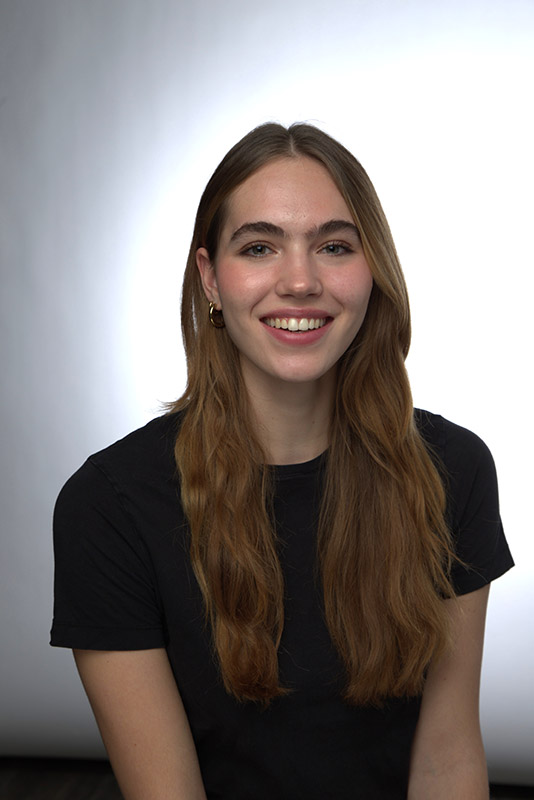
Is a slight smile allowed?
A very subtle, friendly expression is acceptable as long as the mouth remains closed and the facial features do not change. As soon as the corners of the mouth lift noticeably, the cheeks tense, or the eyes narrow, it is considered a smile and is no longer permitted. The criterion, then, is not one’s mood, but the measurable change in facial expression. If you’re unsure: A photographer will notice this immediately while taking the photo and will correct it right away.
Smiling with your mouth closed—is that possible?
This question comes up often, and the answer is nuanced: You must keep your mouth closed, but that alone isn’t enough. Even with your lips closed, a broad smile can alter the area around your cheeks and eyes so much that the biometric measurement is no longer accurate. The overall impression is what matters: The face must look as it does in everyday life when at rest.
Does this also apply to ID cards, passports, and driver’s licenses?
A neutral facial expression is required for all documents that include a biometric photograph—that is, for ID cards, passports, electronic residence permits, and driver’s license photos.
There is a difference in the procedure: As of May 1, 2025, for passports, ID cards, and electronic residence permits, the photo will be taken digitally at the government office or by a photo service provider and submitted electronically. You can read more about this under “Digital Passport Photos.” For a driver’s license, it’s best to check with the relevant agency in advance to find out what format the photo is required to be in.
Exception: Babies and toddlers
For infants and young children, the requirements are less strict. A slightly open mouth or an expression that is not completely neutral is generally accepted, because a baby cannot maintain a neutral expression on command. It is important, however, that the face is visible from the front, in its entirety, and in sharp focus. For more details, see “Baby Passport Photos” and “Children’s Passport Photos.”
What happens if I do smile?
In that case, the photo cannot be used for the document, and a new photo will be required. Since the photo service provider checks the specifications right when the photo is taken, a smile is usually noticed immediately and corrected on the spot—that’s the fastest way. For information on what to do if an image is still rejected, see “Passport Photo Rejected.” Our overview of the most common mistakes in biometric passport photos highlights other typical pitfalls.
Conclusion: Look friendly, but don’t smile
In a passport photo, it’s not the most attractive expression that counts, but the most unmistakable one. Keep your mouth closed, your eyes open, your gaze straight ahead, and your face relaxed—that way, you’re sure to meet the requirements. You can find a photographer near you using our photographer search; your pose will be checked right there during the shoot.
Frequently Asked Questions About Smiling in Passport Photos
Can you smile in your passport photo?
No. You must have a neutral facial expression with your mouth closed. A visible smile or showing your teeth is not permitted in biometric passport photos.
Why aren’t you allowed to smile in passport photos?
Smiling changes the measurement points on the face: the cheeks, eyes, and mouth area shift. This makes automatic biometric matching unreliable.
Is a slight smile allowed in a passport photo?
A very subtle, friendly expression is not a problem as long as the mouth remains closed and the facial features do not change. If the corners of the mouth lift noticeably, it is considered a smile.
Is it okay to smile with my mouth closed?
Keeping your mouth closed is required, but that alone is not enough. Even with your lips closed, there must be no visible change in the area around your cheeks and eyes.
Are babies allowed to smile in their passport photos?
For infants and young children, the guidelines are more lenient. A slightly open mouth or a non-neutral facial expression is generally accepted.

